
How Britain and Asia gamble compared across law, tradition and players
Britain runs one of the world's most open regulated gambling markets, while much of Asia restricts or bans it. We compare the laws, traditions and players of both, and the offshore black market growing in the gaps.

Britain and Asia approach gambling from opposite ends. Great Britain has built one of the world's largest and most open regulated markets, with online casinos, sports betting and lotteries legal and licensed. Across much of Asia, gambling is banned, tightly rationed or confined to a handful of licensed enclaves. This briefing compares the two through their laws, their traditions and their players, and looks at the one thing they increasingly share: an offshore black market that grows wherever regulation leaves a gap.
Two different starting points
In Great Britain, gambling is treated as a legitimate leisure activity to be regulated, not prohibited. The Gambling Act 2005 opened the market to licensed online operators, and the Gambling Commission oversees almost every form of betting and gaming. In the year to March 2026, the regulated industry generated £17.5 billion in gross gambling yield (stakes minus winnings), a rise of 4.4% on the previous year.
Asia has no single model. Mainland China prohibits casino gambling and allows only state-run lotteries. Japan and South Korea have long kept casinos away from their own citizens. Singapore and Macau run large, licensed casino industries but surround them with controls. The Philippines, once a regional hub for online gambling aimed at Chinese players, banned its offshore gaming operators in 2024. What unites the region is the assumption that gambling is a risk to be contained, often by limiting who may play rather than how.

The law in Britain
Britain's model rests on licensing. Any operator offering gambling to consumers in Great Britain must hold a Gambling Commission licence, meet rules on fair play, anti-money-laundering and safer gambling, and fund research and treatment through a statutory levy introduced in 2025.
The last few years have brought the most significant tightening since 2005. Following the government's 2023 gambling white paper:
Online slots stake limits came into force in 2025, capping spins at £5 for adults aged 25 and over and £2 for those aged 18 to 24.
Financial risk checks are being phased in, so that operators assess whether higher-spending customers can afford their losses.
Bonus rules have been tightened, including limits on wagering requirements attached to promotions.
Remote gaming duty rose to 40% of gross profits from April 2026, sharply raising the tax burden on online casino operators.
Supporters see these measures as overdue protection in a market where online play is available around the clock. The industry argues that each new layer of friction makes licensed sites less attractive than unlicensed ones that ignore the rules entirely.
The law across Asia
Macau is the world's largest casino market by revenue and the only place in China where casinos are legal. It reported gross gaming revenue of MOP247.4 billion (about US$30.9 billion) in 2025, up 9.1% on 2024 but still around 85% of the pre-pandemic level of 2019. Since 2022, six concessionaires have operated under a stricter licensing regime, and a crackdown on junket operators, who once organised and financed high-roller trips from the mainland, has largely ended the VIP model that drove Macau's boom.
Singapore permits two integrated resorts but charges its own citizens and permanent residents a daily entry levy to visit the casinos, while foreign tourists enter free. Families can also apply to exclude relatives from the casinos. The model is designed to capture tourism revenue while discouraging local play.
Japan legalised integrated resorts in 2018 after decades of debate. The first, MGM Osaka, broke ground in 2025 and is expected to open around 2030, with Japanese residents facing entry charges and limits on visits.
South Korea allows foreigners into most of its casinos, but only one, Kangwon Land in a former mining region, is open to Korean nationals.
Mainland China bans casinos outright, but its state welfare and sports lotteries sold more than CNY 620 billion (about US$90 billion) of tickets in 2025, making them among the largest lottery systems in the world. Growth slowed sharply that year to under 1%.
Traditions
Britain's gambling culture grew up around horse racing and the high-street bookmaker, which became legal in 1961. Football pools, bingo halls and the National Lottery, launched in 1994, broadened gambling into a mass pastime. Today, football betting and online slots have overtaken racing and bingo as the centre of the market.
In Asia, gambling traditions are older and more social. Mahjong is a fixture of family gatherings across Chinese communities, and card and dice games are a common part of Lunar New Year celebrations, when small stakes are seen as a way to invite luck for the year ahead. Baccarat, a game of chance with simple rules and a strong association with fortune, dominates Macau's casino floors in a way no single game does in Britain.
Japan offers a distinctive case. Pachinko, a pinball-style machine game, is technically not gambling under Japanese law. Players win prizes rather than cash, but those prizes can be exchanged for money at separate shops nearby. The arrangement has allowed a large industry to operate alongside a formal ban on gambling, although pachinko parlours have been in long-term decline.
Superstition shapes play across much of the region. Lucky numbers such as eight, unlucky ones such as four, auspicious dates and rituals at the table all feature in Asian casino culture far more prominently than in Britain, where gambling marketing leans on sport, celebrity and humour.
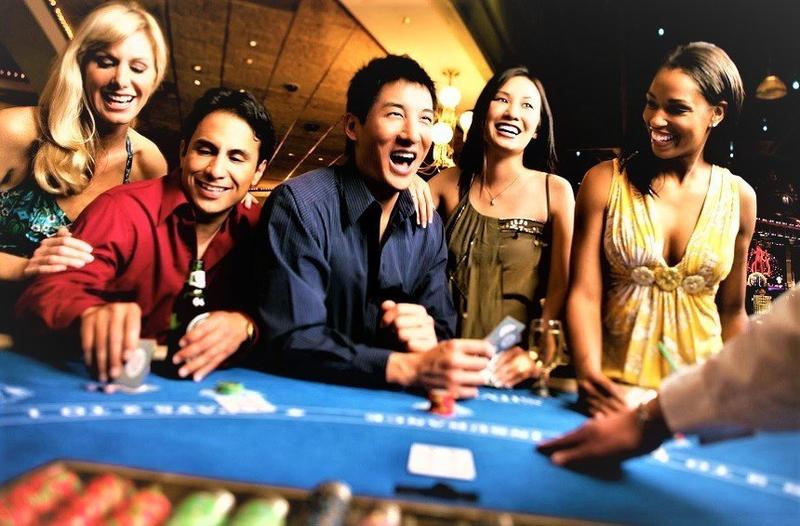
Player portraits
The British player is most likely to be betting on football or playing online slots from a phone. The Gambling Commission recorded an average of 13.4 million active online accounts per month in early 2026. Online casino games are now the fastest-growing segment, with slots revenue up 12% year on year in the first quarter of 2026, while traditional over-the-counter betting in shops continues to shrink. Much of this play is solitary, frequent and low-stakes, which is why regulators have focused on speed of play, stake sizes and affordability.
The Asian casino visitor is more likely to be a traveller. Macau's customers are overwhelmingly visitors from mainland China, Hong Kong and Taiwan; Singapore's resorts are built around tourism; and Japan's resorts are planned with international visitors in mind. Table games, especially baccarat, take a far larger share of play than in Britain, and group and family visits are common.
The everyday Asian gambler, by contrast, plays the lottery, a mahjong game or, in Japan, pachinko. These forms are local, social and often low-stakes, which places them closer to the habits of a British lottery or bingo player than to the high-roller image of Macau.
A further group sits outside both pictures: players in countries where gambling is banned or heavily restricted who turn to offshore websites, often accessed through VPNs and paid for with e-wallets or cryptocurrency.
The black market in the gaps
That last group points to the common challenge. Wherever legal gambling is prohibited, rationed or heavily taxed, unlicensed operators step in.
In Asia, this has long been the dominant problem. Illegal online betting aimed at mainland Chinese players has been linked to large-scale fraud and money laundering, and the Philippines' decision to ban offshore gaming operators followed evidence that some had become fronts for scam centres and organised crime.
Britain's black market is smaller but growing. Estimates by research firm H2 Gambling Capital suggest that stakes with unlicensed operators reached £16.6 billion in 2025, and that the licensed market's share of activity fell from around 97% in 2019 to 92%. The Gambling Commission and some academics have argued that such estimates overstate the problem. Even so, the trend is widely accepted to be rising. Grainne Hurst, chief executive of the Betting and Gaming Council, has warned of "a harmful black market scaling up at pace."
How a new unlicensed brand targets the UK
The playbook of a typical new offshore casino brand aimed at British players is well established. A recent example, which we have chosen not to name, follows the pattern closely:
A licence from elsewhere. The site operates under a licence from a small offshore jurisdiction, or none at all, but not from the Gambling Commission. That means it is not permitted to offer gambling to anyone in Great Britain.
UK-facing signals. Despite this, it lists prices in pounds sterling, accepts British debit cards, e-wallets and cryptocurrency, and uses UK-specific language and football promotions.
"No GamStop" marketing. It advertises itself as outside GamStop, the national self-exclusion scheme. That makes it directly attractive to the people at highest risk: those who have chosen to block themselves from gambling.
None of the UK safeguards. There are no £5 or £2 slot stake limits, no financial risk checks and often bonus offers far larger than any licensed operator may now offer.
Spam-driven visibility. Rather than advertising openly, it relies on networks of review pages, social media accounts and content planted on hacked or abandoned websites, including pages hidden inside university and charity domains, to rank in search results.
For players, the risks are concrete. An unlicensed site, like Spinbob, has no obligation to pay out winnings, no duty to verify age or protect vulnerable customers, and no route to the Gambling Commission or an independent dispute service if something goes wrong. For the regulator, each such brand is easy to launch and hard to remove: when one domain is blocked, another often appears.
The Gambling Commission has responded by working with search engines, payment firms, domain registrars and hosting providers to disrupt these sites. But enforcement against operators based outside the UK remains slow, which is why the debate over how far to tighten the licensed market has become so closely linked to the black market.
What each side can learn
Britain's experience shows that an open, licensed market can bring gambling into the light, fund research and treatment, and give players legal protection. It also shows that rising taxes and friction can push some players towards sites that offer none of those protections.
Asia's experience shows the opposite trade-off. Restricting access, especially for local residents, limits mass-market harm in casinos, but leaves demand to be met by lotteries, grey-zone products and illegal online operators that are far harder to police.
Neither model has solved the underlying problem. As gambling moves almost entirely online, the boundary that matters is no longer between countries with casinos and countries without, but between operators that answer to a regulator and those that do not.
Frequently asked questions
Is online gambling legal in the UK?
Yes. Online gambling is legal in Great Britain, but only with operators licensed by the Gambling Commission. Offering gambling to people in Great Britain without a Commission licence is illegal.
What are the online slots stake limits in the UK?
Since 2025, online slots spins have been capped at £5 for players aged 25 and over and £2 for players aged 18 to 24.
Which Asian countries allow casino gambling?
Macau, Singapore, South Korea, the Philippines, Cambodia and Vietnam all have licensed casinos, often with restrictions on local residents. Japan has legalised integrated resorts, with the first expected around 2030. Mainland China prohibits casinos but runs state lotteries.
What is the UK gambling black market?
It refers to gambling with operators that do not hold a Gambling Commission licence. Estimates of its size vary, but industry-commissioned research suggests it accounted for around 8% of UK gambling activity in 2025.
How can I check whether a gambling site is licensed in the UK?
Look for the operator's Gambling Commission licence number on its website and check it against the Commission's public register. Sites that advertise themselves as outside GamStop are not licensed in Great Britain.
Safer gambling
If gambling is causing problems for you or someone you know, free and confidential support is available. In Great Britain, the National Gambling Helpline, run by GamCare, is open 24 hours a day on 0808 8020 133. Information and advice are also available from BeGambleAware.org, and you can block yourself from all licensed British gambling sites through GamStop.
Sources
Gambling Commission, industry statistics and market overview, operator data to March 2026
Department for Culture, Media and Sport, High stakes: gambling reform for the digital age (2023)
H2 Gambling Capital research on the UK black market, as reported May 2026
Macau Gaming Inspection and Coordination Bureau, gross gaming revenue data, as reported by Macau Business (January 2026)
China Ministry of Finance lottery sales data, as reported by AGB (2026)
Reporting on MGM Osaka by GGRAsia and Yogonet (2025)
How to cite this article
Imogen Thackray (2026) ‘How Britain and Asia gamble compared across law, tradition and players’, Asian EFL Journal, 6 October 2026. Available at: https://asian-efljournal.com/content/how-britain-and-asia-gamble-compared-across-law-tradition-and-players/