Three ways to regulate AI in the UK, China and South Korea
The UK relies on existing regulators, China layers targeted rules under state control, and South Korea has passed a dedicated AI law. We compare the three models and what they mean for business.
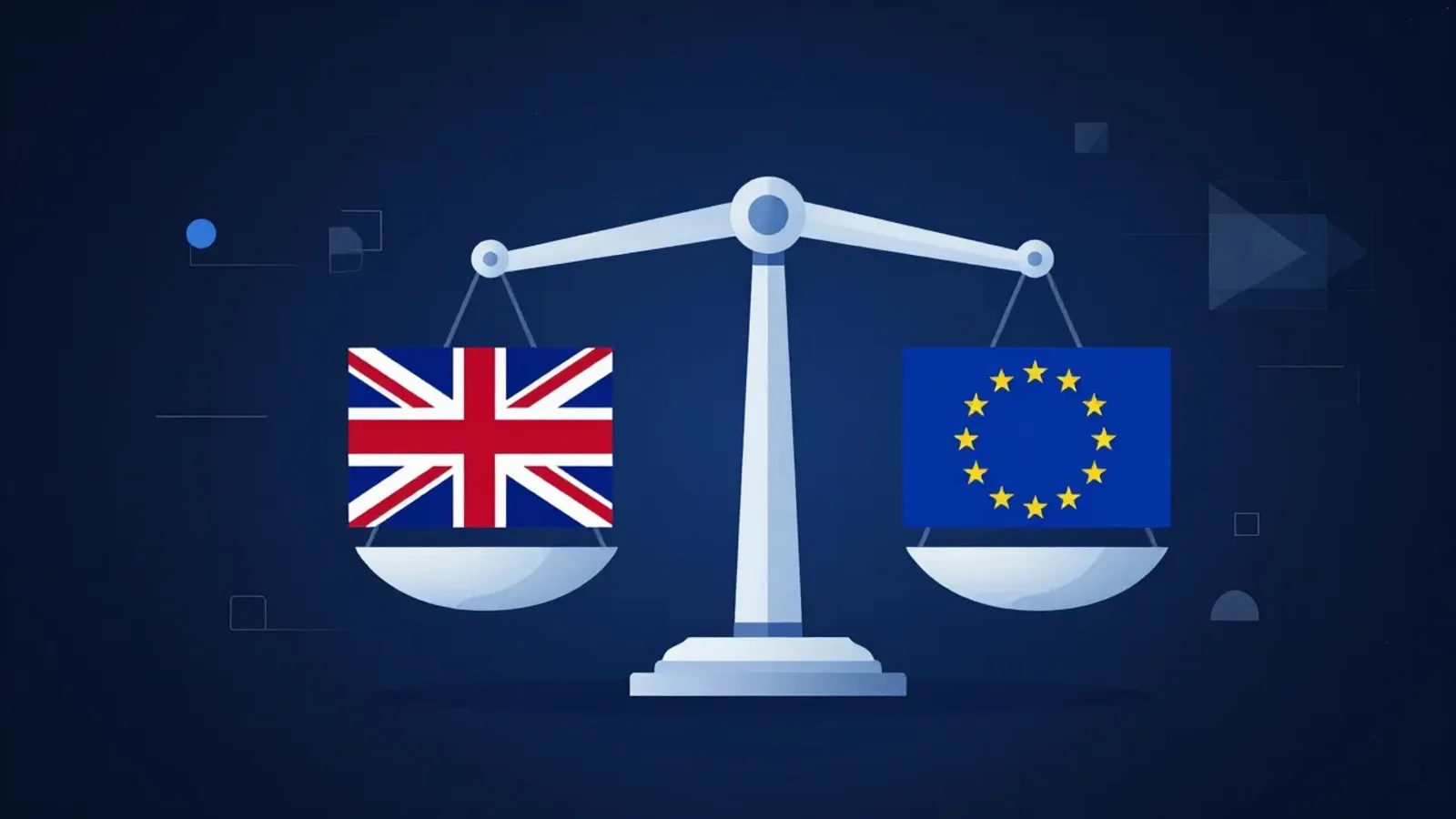
Governments everywhere agree that artificial intelligence needs rules. They disagree sharply on what kind. The UK, China and South Korea offer three distinct answers: rely on the regulators you already have, write targeted rules under close state supervision, or pass a single framework law. This briefing compares the three models, where each stands in autumn 2026 and what they mean for organisations operating across all three markets.
Why compare these three
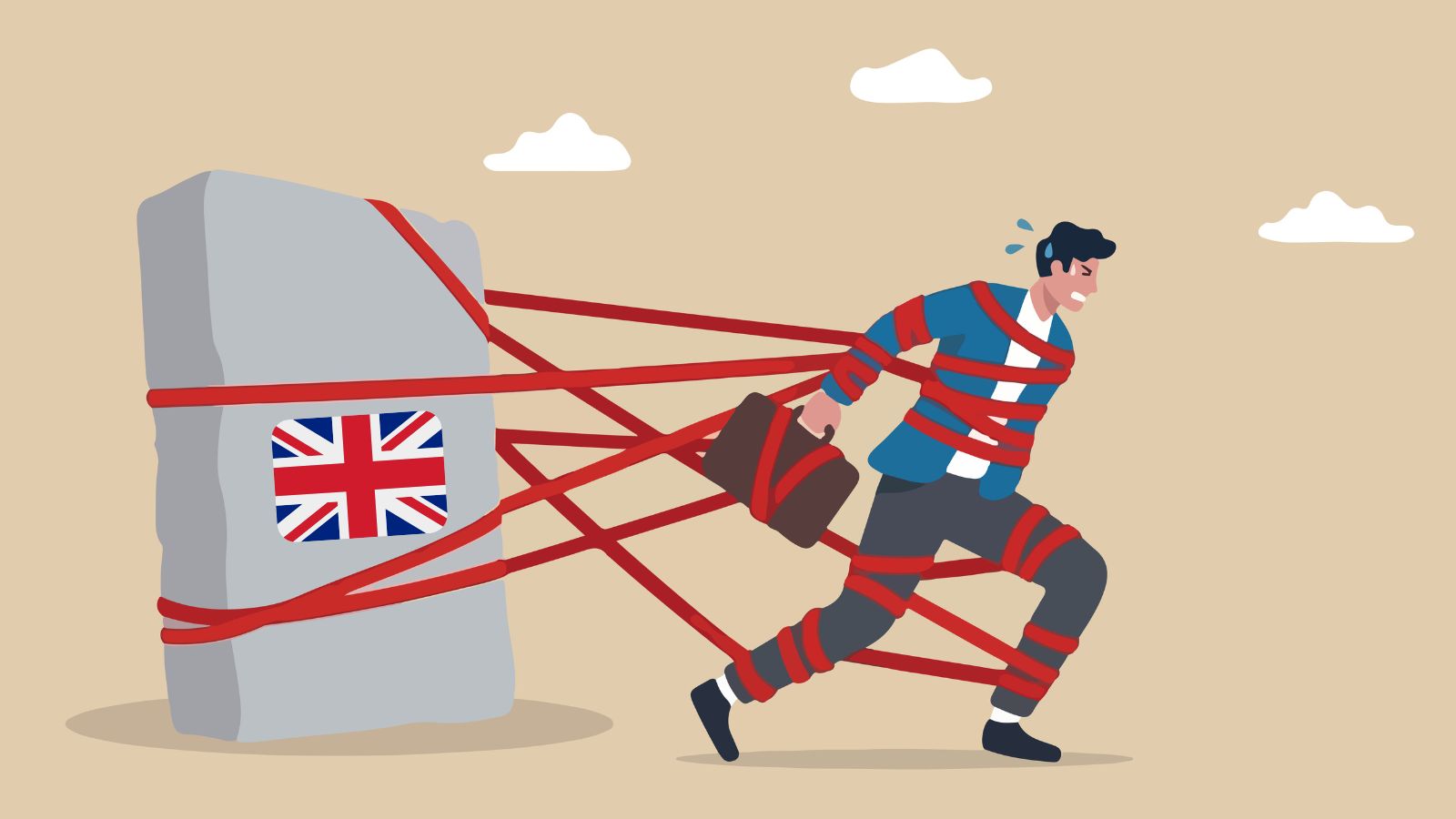
The European Union's AI Act tends to dominate discussion of AI regulation, but it is only one template. The UK, China and South Korea are all significant AI economies with strong research bases and ambitious industrial strategies, and each has chosen a different route. Together they show the main trade-offs facing any government: flexibility against legal certainty, innovation against control, and speed against consultation.
For companies, the differences are not academic. A firm deploying a chatbot, a hiring tool or a medical imaging system in London, Shanghai and Seoul faces three different sets of obligations, regulators and penalties.
The UK: regulate at the point of use
The UK has deliberately avoided a single AI law. Its approach dates back to the 2023 white paper A pro-innovation approach to AI regulation, which set out five cross-cutting principles: safety and robustness, transparency, fairness, accountability, and contestability and redress. Rather than creating a new AI regulator, the government asked existing bodies, such as the Information Commissioner's Office, the Financial Conduct Authority, the Competition and Markets Authority and Ofcom, to apply those principles within their own sectors.
The present government has kept that model. Speaking in a House of Lords debate on a private member's AI Regulation Bill in June 2026, science minister Baroness Lloyd of Effra said the government believes "most AI systems should be regulated at the point of use." She argued that sector regulators understand the industries they oversee and have the right expertise to judge how AI is used within them.
The UK's main dedicated AI institution is the AI Security Institute, renamed from the AI Safety Institute in February 2025. It tests frontier models and researches risks such as misuse in cyber attacks, but it is not a regulator and does not license or approve systems. Alongside it, the January 2025 AI Opportunities Action Plan focuses on growth: compute capacity, data access and public sector adoption.
What the UK still lacks is a comprehensive AI bill. Ministers had signalled legislation aimed at the most powerful models, but as of September 2026 no such bill has been introduced. The government has instead pointed to a Regulating for Growth Bill, announced in the King's Speech, which would create cross-economy regulatory sandboxes. Parliamentary committees and civil society groups continue to press for statutory AI rules, particularly on human rights and on copyright, where the use of creative works to train models remains contested.
Strengths: flexibility, low compliance burden for most firms, and rules shaped by regulators who know each sector. Weaknesses: gaps between regulators, uneven enforcement, and little legal certainty for developers of general-purpose models that cut across every sector.
China: targeted rules under state supervision
China moved earlier and faster than most countries, but in pieces rather than through one statute. Since 2022 it has issued a series of specific regulations, each aimed at a particular technology:
Algorithm recommendation rules (in force March 2022) govern how platforms use algorithms to rank and push content, and require filing with the Cyberspace Administration of China (CAC).
Deep synthesis rules (January 2023) cover deepfakes and synthetic media, requiring labelling and identity verification.
Interim measures for generative AI services (August 2023) apply to public-facing chatbots and image generators, requiring security assessments, model filing and content that reflects "core socialist values".
AI-generated content labelling measures (September 2025) require both visible labels and embedded metadata on AI-generated text, images, audio and video.
In 2026 AI governance moved into national law for the first time. Amendments to the Cybersecurity Law, effective from 1 January 2026, include dedicated AI provisions committing the state to strengthen AI ethics oversight and risk assessment while supporting innovation. The amendments also raise maximum penalties for organisations to RMB 10 million, around ten times the previous ceiling, and widen the law's reach to conduct outside China.
China's system is built around the CAC, which maintains registries of filed algorithms and approved generative models. A comprehensive AI law has been discussed in legislative planning for several years but has not yet been enacted.
Strengths: speed, technical specificity, and a regulator with clear authority and visibility over deployed systems. Weaknesses: heavy compliance demands, content controls that foreign firms often cannot accept, and rules that can change quickly with limited public consultation.
South Korea: a single framework law
South Korea has taken the route the UK has so far avoided. Its Framework Act on the Development of Artificial Intelligence and Establishment of Trust, usually called the AI Basic Act, was passed by the National Assembly in December 2024 and took effect on 22 January 2026. That made South Korea one of the first countries after the EU to bring a comprehensive AI statute into force.
The law combines promotion and regulation. On the promotion side, it requires the government to support AI research and development, data centres, smaller firms and start-ups. On the regulatory side, it sets out three main obligations:
High-impact AI. Systems used in sensitive areas, including healthcare, energy, transport, hiring, credit decisions and biometric analysis, must meet duties on risk management, explanation, human oversight and user protection.
Generative AI transparency. Users must be told in advance when a product uses generative AI, and outputs that could be mistaken for real images, audio or video must be clearly labelled.
High-performance AI. Models trained with at least 10²⁶ floating-point operations of compute face additional safety obligations.
Foreign companies without a Korean office must appoint a local representative if they exceed thresholds such as 1 trillion won in global revenue, 10 billion won in AI service revenue in Korea, or one million average daily Korean users. The Ministry of Science and ICT supervises the law.
Penalties are modest by international standards: administrative fines of up to 30 million won, roughly £16,000, for failures such as missing labels or not appointing a representative. The government has also committed to a grace period of at least a year before fines are imposed, to give companies time to adapt.
Unlike the EU, which sorts systems by risk category, South Korea leans on technical thresholds such as training compute to decide which models face the strictest rules.
Strengths: legal certainty, a single reference point for compliance, and an explicit pairing of regulation with industrial support. Weaknesses: broad definitions that firms must interpret before detailed guidance matures, and concern among start-ups that compliance costs will fall hardest on smaller players.
What it means for business
For organisations active in all three markets, three practical points stand out.
Labelling is becoming the baseline. China and South Korea both require AI-generated content to be labelled, and the EU is moving the same way. Firms that build watermarking and disclosure into products once, to the strictest standard, will avoid rebuilding them market by market. The UK is the outlier, but British firms selling into Asia or Europe will need these capabilities anyway.
Sector matters more than technology in the UK. A company using AI for credit scoring in Britain answers to the FCA and data protection law, not to an AI regulator. Compliance teams need to map AI uses against existing sector rules rather than wait for an AI-specific code.
Local presence and filings are a real cost in Asia. China's filing regime and South Korea's local representative requirement both create ongoing administrative obligations. For larger foreign AI providers, these are now a standard part of market entry in East Asia.
Which model will prevail?
None of the three is settled. The UK faces sustained pressure to legislate, particularly on frontier models, copyright and human rights. China is steadily consolidating its piecemeal rules into higher-level law. South Korea will spend its first years refining guidance and testing how its broad definitions work in practice.
What is emerging is not one global standard but a set of overlapping regimes that share some common ground, especially on transparency and on extra scrutiny for the most powerful models, while differing on who holds power and how much discretion regulators keep. For the UK, the question is whether a light-touch, regulator-led approach remains credible as its trading partners in Asia and Europe write AI rules into statute.
Frequently asked questions
Does the UK have an AI law?
No. As of September 2026 the UK has no comprehensive AI legislation. AI is regulated through existing sector laws and regulators, guided by five cross-cutting principles set out in 2023.
What is South Korea's AI Basic Act?
It is a framework law that took effect on 22 January 2026. It sets duties for high-impact and high-performance AI systems, requires labelling of generative AI outputs and obliges large foreign AI firms to appoint a local representative in Korea.
How does China regulate generative AI?
China regulates generative AI through interim measures in force since August 2023, which require security assessments and model filing, and through labelling rules in force since September 2025. Amendments to the Cybersecurity Law added AI provisions from January 2026.
Which countries require labels on AI-generated content?
Among these three, China and South Korea both legally require AI-generated content to be labelled. The UK has no general labelling requirement.
What are the penalties under South Korea's AI law?
Administrative fines of up to 30 million won can be imposed, for example for failing to label generative AI content. The government has committed to a grace period of at least a year before fines are enforced.
Sources
Department for Science, Innovation and Technology, A pro-innovation approach to AI regulation (2023)
House of Lords Grand Committee, AI Regulation Bill debate (4 June 2026)
Lewis Silkin, analysis of UK AI legislation (September 2026)
Cooley, South Korea's AI Basic Act: overview and key takeaways (January 2026)
The Daily Star / AFP reporting on South Korea's AI Basic Act (January 2026)
IAPP, China's Cybersecurity Law amendments introduce AI provisions
Cyberspace Administration of China, regulations on algorithm recommendation, deep synthesis, generative AI services and AI-generated content labelling (2022–2025)
How to cite this article
Imogen Thackray (2026) ‘Three ways to regulate AI in the UK, China and South Korea’, Asian EFL Journal, 6 October 2026. Available at: https://asian-efljournal.com/content/three-ways-to-regulate-ai-in-the-uk-china-and-south-korea/